
- Key Takeaways – Benefits of Play-based Learning
- What is Play-Based Learning?
- The Core Benefits of Learning Through Play
- Fostering Future-Ready Skills
- Play in Dubai’s Early Years
- Beyond Fun and Games
- Creating the Ideal Play Environment
- Conclusion
- Frequently Asked Questions
- What is play-based learning?
- How does play-based learning benefit children in Dubai?
- What future-ready skills does play-based learning foster?
- Why is play important in Dubai’s early years education?
- Is play-based learning only about fun and games?
- How can parents create an ideal play environment at home in Dubai?
- Can play-based learning prepare children for formal schooling in the UAE?
Key Takeaways
- With its benefits for children’s cognitive, social, and emotional development, play-based learning is a tried and true approach in Dubai’s multicultural community.
- Guided play bolsters kids’ ability to think creatively, solve problems, and communicate effectively, which are necessary skills for future academic and personal success.
- It is up to teachers and parents to establish safe, inclusive, active play spaces that encourage exploration and development.
- With play-based learning, we infuse it with bilingual and culturally rich activities that develop language skills and connect with Dubai’s multicultural community.
- By balancing lessons with play time, you increase their engagement and motivation and prepare them for a lifetime of learning.
- Using observational assessments and flexible classroom setups ensures that each child’s progress and interests are supported through playful experiences.
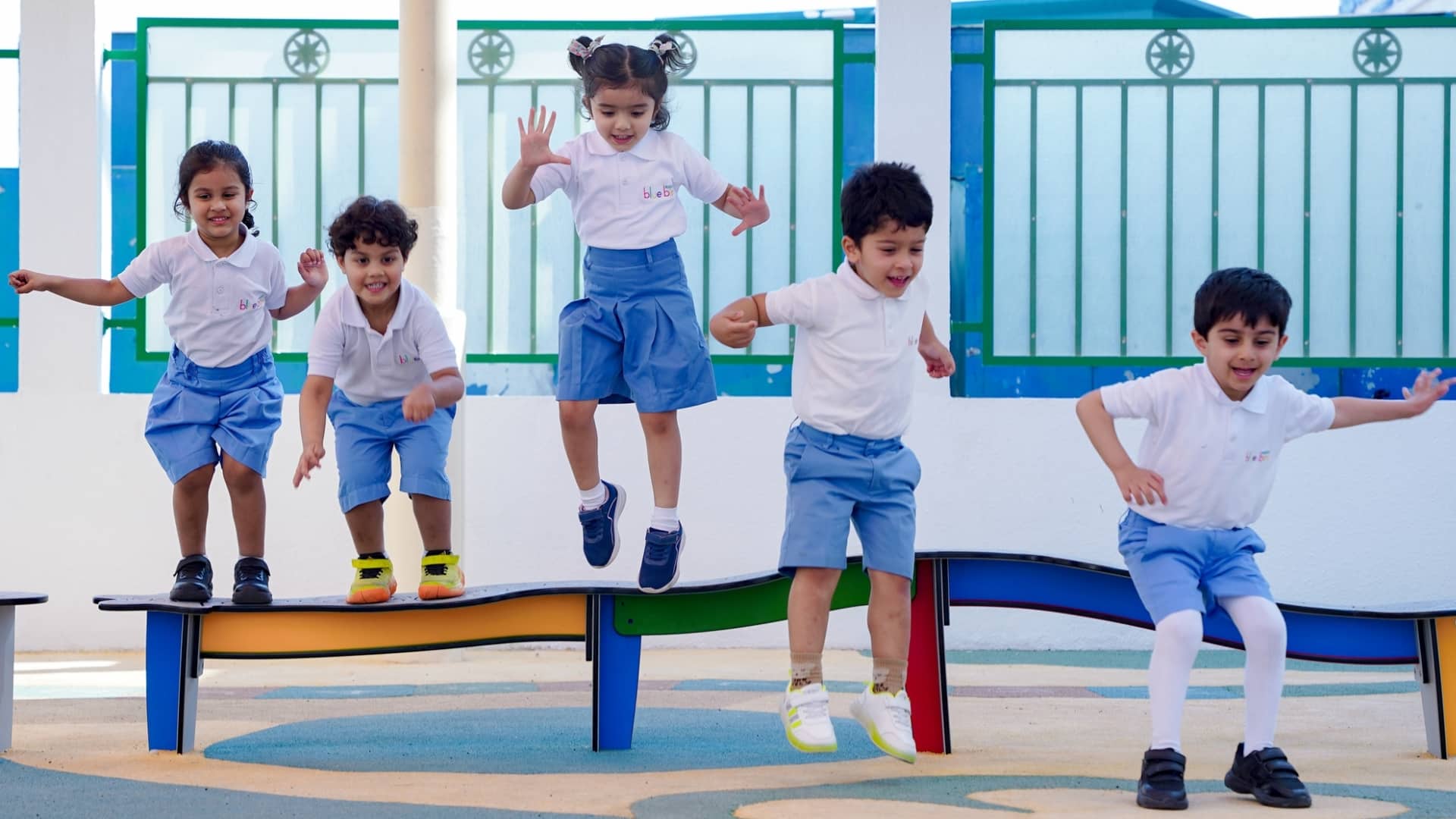
The advantages of play-based learning are better language development in young children, enhanced social skills, and more powerful problem-solving. Play-based learning allows children to absorb new concepts naturally, utilizing their environment and local resources such as parks or mini learning centers in Dubai.
Many nurseries and schools in the UAE implement play to teach early math, science, and language that keeps kids absorbed and inquisitive. Play learners display more teamwork and stress resilience.
Play-based approaches align with Dubai’s child-centric educational emphasis, allowing parents and educators to witness actual improvements both at home and in the classroom. What follows explains how play-based learning works and why it suits Dubai’s eclectic, rapidly growing schools.
What is Play-Based Learning?
Play-based learning is a style of education in which play is the primary means for learning new concepts and abilities. Instead of relying on rigid teaching strategies, this approach places the child in the middle, allowing them to pursue their passions and develop through experiential activities.
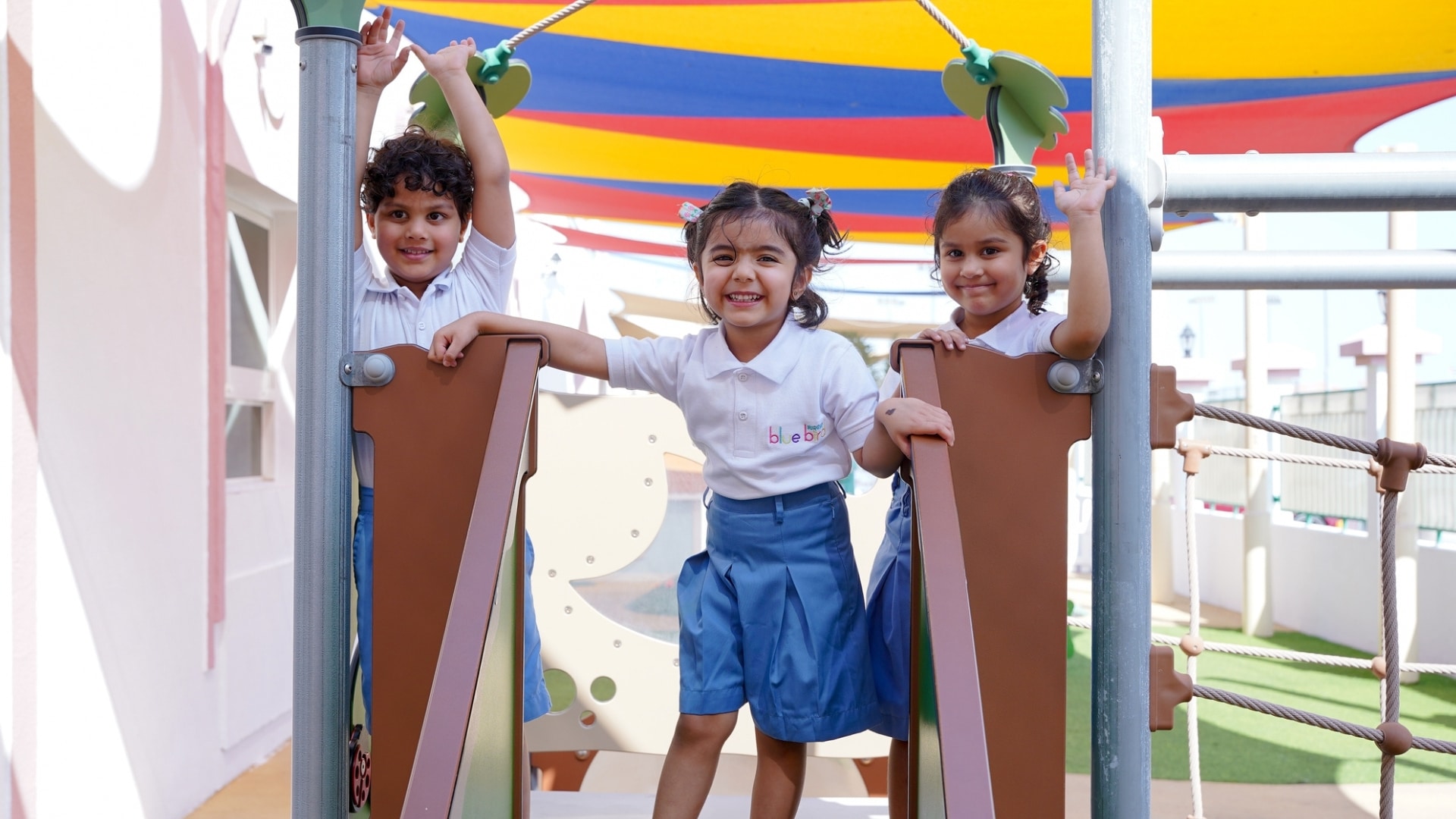
Play enables organic skill development. Kids absorb social signals, language, and reasoning just by participating in games or activities. The setting matters. A nurturing environment, with appropriate supplies and motivation, allows kids to feel secure in taking risks, failing, and taking more risks.
Guided play, where adults provide prompts or structure without taking control, can deepen learning and keep curiosity alive.
A Child’s Perspective
Children view play as the primary means of learning about their world. It’s intuitive and never contrived. Using blocks, sand, or drama play, they try to understand their surroundings.
Free play is essential to the generation of new and creative thought. When kids construct worlds with LEGO bricks or spin tales with dolls, they’re not just playing—they’re innovating, strategizing, and thinking creatively. This type of play allows them to problem solve independently, sometimes in ways that adults wouldn’t anticipate.
Social skills blossom in play. They learn to share, take turns, and resolve minor disputes while playing with their peers. These real-world experiences assist them in practicing empathy and self-regulation.
Play mirrors a child’s innate curiosity. Whether they’re digging in the sand at Jumeirah Beach or exploring a park, their instinct to find things out and inquire influences every playtime.
A Teacher’s Role
Teachers have a major role in play-based learning. They schedule activities that align with what kids like and what they need to learn. This requires intentional reflection and a strong understanding of each child’s developmental stage.
By observing kids as they play, teachers can see which abilities require additional polish and what activities generate the most enthusiasm. A teacher might, for example, establish a make-believe shop to assist with counting or language, then retreat and observe how children engage with it.
Designing a safe, rich play environment counts. Teachers provide lots of toys, art supplies, and space for noisy and quiet activities.
When teachers get playful with their lessons, learning doesn’t feel like work so much as play. Children will participate and retain the learning.
A Dubai Context
Dubai’s education sector backs play-based learning, connecting it to national outcomes for early childhood development. Schools and nurseries around the city are embracing it to support children in flourishing in a rapidly changing world.
Dubai’s multicultural blend allows kids to play and learn with kids from a variety of different cultures. This fosters respect for diversity and makes kids better communicators.
Local communities and government organizations, like the Dubai Early Childhood Development Center, host events and initiatives that promote the importance of play-based learning. Parks, museums and community centers fill in the gap by providing safe spaces for exploration and social play.
Rich community resources, from libraries to play zones in malls, help ensure that play is not relegated to the classroom. Families frequently leverage these spaces to advance their child’s development beyond the school day.
The Core Benefits of Learning Through Play
Play-based learning isn’t just enjoyable — it molds a child’s development in countless areas. Research connects it to improved memory, oral language, social skills, self-regulation and subsequent academic success. Here in Dubai and throughout the UAE, where education is of a high caliber and early childhood environments are eclectic, play is a spark for well-rounded growth.
Here are the core benefits, explained.
- Enhanced cognitive, social, and emotional development: Play-based learning builds foundational skills in memory, language, social interaction, and emotional management.
- Fosters a love for learning: Through play, children are motivated to explore, ask questions, and stay curious, which can lead to a lifelong interest in learning.
- Improves academic outcomes: Studies show that children engaged in play-based learning demonstrate better problem solving, literacy, and numeracy skills.
- Supports holistic growth: Play addresses cognitive, physical, social, and emotional needs, making it a comprehensive approach to early childhood education.
1. Cognitive Growth
Have you ever noticed how playful learning ignites thinking, propelling kids to figure out things independently? When children engage in block play to construct towers or categorize items, they’re not just playing; they’re developing essential cognitive skills such as planning and experimenting with new concepts. Imaginative play, like running a store or visiting a fantasy desert, fosters creativity and promotes innovative thought.
Sensory play, including activities with clay, sand, or water, allows children to engage their senses, enhancing concentration and forming connections between tactile experiences and visual stimuli. These learning activities create a rich learning environment where exploration thrives.
Additionally, card games, puzzles, and matching activities found in many Dubai nurseries boost memory and logical thinking. Hands-on science experiments or outdoor exploration help children understand cause and effect, enriching their learning experiences and curiosity.
2. Social Skills
Cooperative play, for example, group games or building projects, facilitates teamwork and communication. Children learn to share, alternate turns, and respect others’ perspectives. Play teaches conflict resolution in real time as kids resolve disagreements over toys or roles and fosters empathy by having them think about others’ emotions.
Social pretend play — such as performing domestic or community roles — enriches kids’ insight into social conventions and dynamics. Board games or basic ball games instill patience and reverence for rules. These common experiences assist UAE children, who frequently hail from different backgrounds, in developing adaptive tolerance and building solid peer bonds.
3. Emotional Resilience
Play allows children to communicate emotions that they may not be able to verbalize. It teaches them to handle disappointment, frustration, or excitement in a low-stakes environment. Confidence blooms when kids conquer new skills or create their own games.
Through dramatic play (dressing up or acting out), kids can role-play through real-life situations like going to school or making friends and experiment with varying experiences. Art, music and movement provide an outlet for creativity and emotional expression, nurturing long-term emotional well-being.
4. Language Acquisition
As they play, children experiment with language, tell tales and learn to negotiate with their peers. Storytelling and role-play increase vocabulary and knowledge of sentence structure. Socializing in play gives kids a chance to practice listening and responding, which are key components of effective communication.
Activities such as puppet shows, rhyming games and singing encourage literacy. Storybooks and story retelling with props promote language-drenched play, which enhances comprehension and confidence.
5. Physical Development
Active play builds gross motor skills, such as running, climbing, or hopping, and fine motor skills, such as stacking blocks or threading beads. Outdoor play, which is a staple of most UAE early learning centers, enhances balance, fitness, and hand-eye coordination.
Sensory play, such as pouring, squishing, or sorting, hones tactile and motor skills. Obstacle courses, jump rope, and basic ball games get kids moving and exploring, promoting healthy growth and brain development.
Fostering Future-Ready Skills
A foundation for future-ready skills. We’ve been well-known for cultivating skills of the future by developing lifelong skills that equip kids and adults alike to adapt to changing demands. In play, learners thrive in ways that extend well beyond the classroom in a fluid environment like Dubai, where nimbleness and futurist thinking are necessities.
Essential skills fostered through play-based learning include creativity and innovation, critical thinking, problem-solving, adaptability, collaboration and teamwork, communication, emotional intelligence, and lifelong learning habits.
Critical Thinking
Play nurtures critical thinking by providing room for playful learning experiences and experimenting with solutions independently. When children engage in imaginative play, they ask ‘what if’ and explore new solutions. This habit of wonder-struck exploration motivates deeper thinking, which is beneficial at any age.
Analytical skills begin here as kids sort, match, and discover how things work through hands-on learning activities. Strategy games — even something as simple as a board game or puzzle — push kids to anticipate several moves in advance. When they play memory games or stack a tower, they deliberate choices and anticipate consequences, enhancing their cognitive development.
Within Dubai’s eclectic classrooms, educators can leverage these games to inspire interest and encourage autonomous learning. Basic tasks like grouping items by size or color or determining how to fit shapes onto a board teach children to refine their analytical and decision-making skills in effective learning environments.
Adventuring outside to the park, a playscape, or a role-play station affords them practical experience in problem-solving and decision-making, contributing to their overall social development.
Creative Problem-Solving
Kids have been running wild with their creativity, using make-believe to experiment with novel concepts and discover alternative paths to an objective. Presented with open-ended materials such as blocks, clay, or loose parts, they are able to construct and explore without predetermined results.
This kind of play encourages creativity since there is no one right answer, just lots of possibilities. Collaborating with others during play encourages creative thinking as well. When kids construct something or role-play with peers, they exchange concepts and teach one another.
They ideate, haggle, and update along the way. This develops not just creativity but also the courage to experiment. Examples such as constructing a city from recycled boxes or creating a new game with simple rules allow kids to collaborate on problem solving.
These exercises may be incorporated into daily routines in Dubai’s preschool classrooms, where educators establish stations for pretend play and stimulate students to tinker.
Collaborative Innovation
Group play is key for playful learning, as it fosters collaboration among children. When kids engage in playful activities with their peers, they learn about sharing, listening, and turn-taking while respecting diverse perspectives, which builds their confidence. This sense of community is crucial for future workplaces that emphasize robust social skills and teamwork.
As children participate in playful learning experiences, they share ideas, justify decisions, and occasionally must concede. Team-based games, such as constructing a group sculpture or a relay race, help instill the ability to problem-solve collectively and work towards a common objective, enhancing their social competence.
These essential life skills are particularly valuable in dynamic environments like Dubai, where teamwork propels progress. Multi-player games and team-based missions not only promote creativity but also encourage kids to invent unique solutions to challenges.
For instance, a group puzzle or a team-building exercise in a local park can ignite ideas and forge bonds.
Play in Dubai’s Early Years
Play is at the heart of early learning in Dubai. It aligns with the natural way toddlers acquire knowledge and it aligns with how schools here are looking to support children develop socially, emotionally, and academically. Stuff to play with, because play comes first in Dubai’s EYFS – the early years foundation stage of the common British curriculum.
This forms the foundation for an intrinsic motivation to learn that combines academic and individual development. For kids in Dubai, where cultures and languages intermingle, play is a way to allow them to learn from the world around them and from one another.
Indoor Exploration
Indoor play areas in Dubai’s early years learning environments are not merely secure sites to kill time; they provide playful learning experiences that ignite curiosity and creative thinking. Utilizing sensory-friendly configurations, such as soft mats, textured toys, and vivid colors, these spaces allow kids to engage in imaginative play, enabling them to touch, see, and hear, which illuminates their senses and accelerates cognitive development.
Teachers arrange various indoor activities that foster essential life skills and academic learning outcomes. For instance, block corners assist in developing fine motor skills, while art stations enhance hand-eye coordination and spark creativity. Role-play corners provide opportunities for children to test-drive new concepts and social roles, encouraging social development and collaboration with peers.
One engaging activity is the use of sensory bins stuffed with sand or rice, complemented by miniature scoops and pouring cups. Duplo blocks, large enough to be safe yet small enough to allow for creative play, are also a natural fit for this age group. Crafts using local materials, such as palm fronds or shells, add a nice touch that connects the activity to Dubai’s surroundings.
These thoughtfully arranged learning activities inspire children to discover and study independently, promoting a lifelong love for learning.
Cultural Connection
Dubai’s classrooms are bursting with kids from every corner of the world, and playful learning experiences can help bridge cultural gaps. As they engage in various playful activities, children discover diverse traditions, cuisines, and lifestyles. Weaved into our days are folk tales, native songs, and communal games from a rich array of cultures, so each child can feel acknowledged and celebrated.
Many of these learning activities are shaped by cultural narratives and traditions. Teachers may create a majlis corner with pillows and Arabic stories or arrange a role-play market based on Dubai’s souks. These adventures allow kids to slip into new shoes and experience reverence for the city’s traditions and the diverse cultures surrounding them.
Inclusive play spaces embrace this diversity by intermingling toys, books, and activities from various cultures. Holiday-themed group art projects centered on EID, DIWALI, or Christmas foster understanding and inspire dialogue. Through such playful pedagogies, children learn to respect differences while discovering similarities through basic shared play.
Bilingual Foundations
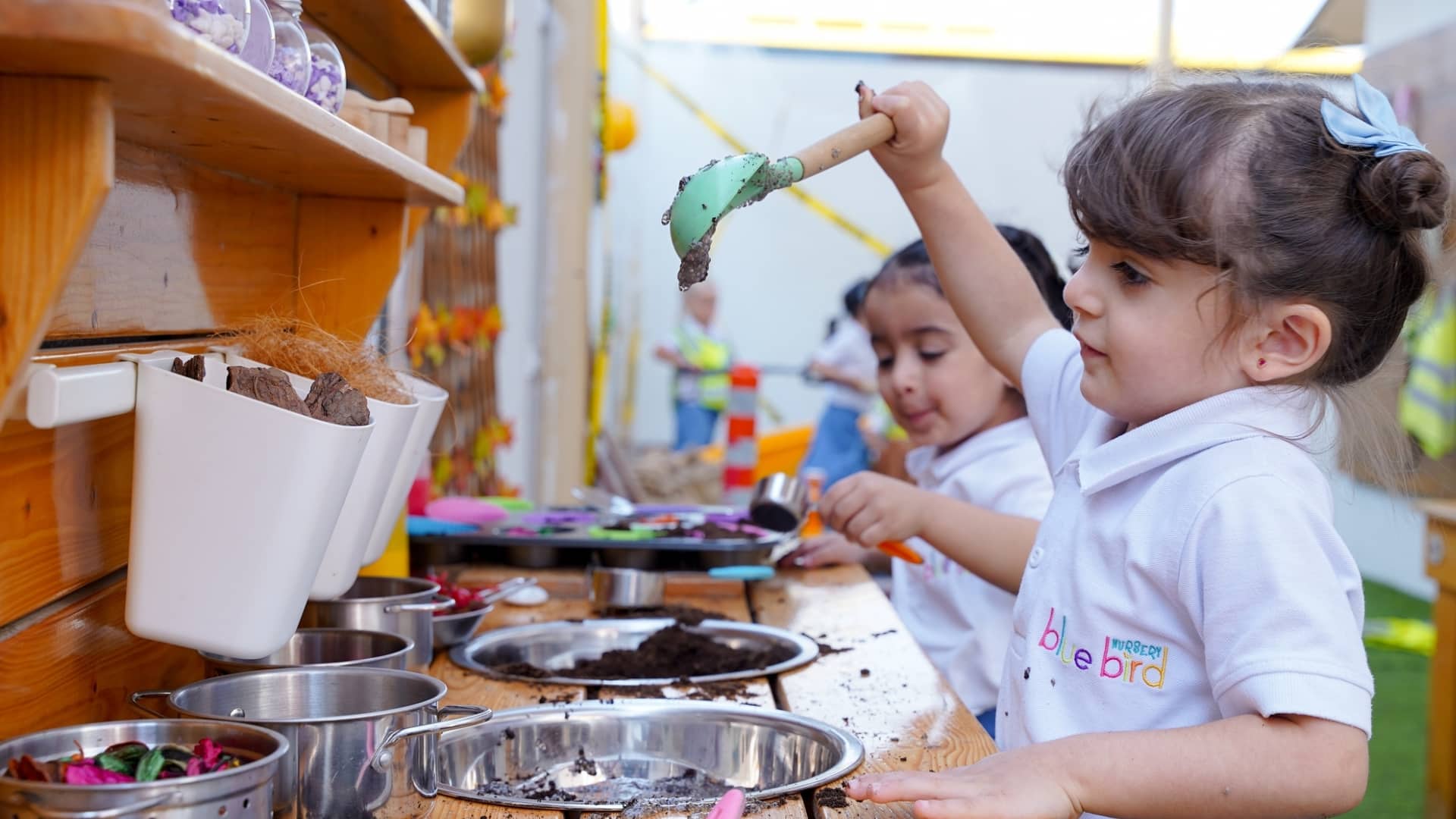
In Dubai, where many children grow up hearing both Arabic and English, play is a crucial mechanism for developing robust language abilities. Play-based environments frequently mix both languages into activities, facilitating language acquisition and allowing children to embrace a bilingual identity.
Storytelling and role play are particularly useful. Teachers could read a story in Arabic, then perform in English, or have puppets that swapped languages. This combination aids children in associating words with real-world actions and it cements the new vocabulary.
Below are examples of bilingual play activities:
|
Activity |
Language Used |
Skill Developed |
|---|---|---|
|
Story Circles |
Arabic & English |
Listening, speaking |
|
Puppet Shows |
Arabic & English |
Vocabulary, comprehension |
|
Song and Rhyme Time |
Arabic & English |
Pronunciation, rhythm |
|
Role-Play Shops |
Arabic & English |
Social skills, negotiation |
These activities demonstrate how play-based language learning comes naturally and is more fun. This sets a solid ground for future school times.
Beyond Fun and Games
Play based learning is often perceived as just fun and games, or a reprieve from serious work. However, in effective play based learning environments, play fosters creativity and is a crucial component of profound, enduring learning across ages and disciplines. In schools in Dubai and the UAE, playful learning experiences are sometimes dismissed as inferior to lesson time or exercise drilling.
Misconceptions vs Reality
A lot of people believe play is just recreation. Others think kids just employ it to kill time or expend energy, not gain it. This perspective ignores the deep learning that occurs through play. Research conducted both in the UAE and internationally reveals that kids who learn through play become better problem solvers, more articulate, and more socially aware.
Play allows kids to experiment with concepts, solve problems, and develop novel skills with no hesitation that they might fail. Play is no longer just fun and games. Many teachers now view it as a legitimate pedagogical instrument. It is not just for nursery or kindergarten.
Play-Based Math and Science, on the other hand, bring tougher concepts to life in several Dubai schools. For instance, a local elementary school teaches fractions using building blocks. Kids can see, feel, and manipulate the pieces, connecting abstract math to the tangible. These programs show that play can fuel serious learning, not just kill time.
Balancing Play and Academics
Checklist for integrating play with academics:
- Set clear goals: Decide what you want students to learn from play.
- Mix activities: Blend guided play with open-ended tasks.
- Connect to curriculum: Use themes or materials tied to lessons.
- Give room for choice: Let students pick how they play sometimes.
- Make time for review: Discuss what was learned after play.
There’s room for both guided and unguided play in Dubai’s classrooms. Teachers design lessons in which the kids solve puzzles, act out stories, or use sand and water tables, then move to more explicit instruction. This blend keeps students engaged.
It makes them connect knowledge to real life and makes learning less stressful. Play has another role to play in student motivation as well. When kids learn by doing, by building, by role-playing, they actually recall more of what they learn.
For example, a science unit on weather may use miniatures and water to demonstrate rain and wind. Students retain the information and have fun doing it!
Assessing True Progress
Evaluating play-based learning is not the same as grading a test. Teachers employ observations, seeing how kids tackle problems or collaborate with peers. These ‘soft skills’ are difficult to quantify on paper, but they exhibit genuine development.
Additional tools such as checklists, photos, or short videos can be used. For instance, teachers in Dubai can monitor how frequently a child takes the lead, shares, or poses questions in play. This provides a more complete sense of advance than a quiz can.
Play-based assessments help teachers spot a child’s strengths and interests. If a student builds complex structures out of blocks, it might show strong spatial skills. If another creates stories during play, it hints at language skills.
These insights help teachers plan next steps.
Creating the Ideal Play Environment
A well-crafted play environment provides kids more than entertainment. It provides them the foundation for learning, development, and communication. Play-based learning flourishes when the setting encourages creativity, options, and liberty to discover.
In Dubai, where countless families and cultures intertwine, intentional design allows each child to feel welcomed and appreciated.
- Key elements of an effective play environment:
- Child-proof, hazard-free areas with cushioned floors and rounded corners.
- Accessible to children of all abilities with ramps and wide paths.
- A combination of open areas and warm nooks for group and solo play.
- Plenty of natural light and fresh air circulation to increase concentration and general health.
- Modular furniture and portable materials that facilitate rapid reconfiguration.
- Play materials reflecting Dubai’s cultures and languages.
- Age-appropriate toys that inspire counting, sorting, and pretend play.
- Plenty of unstructured play time and not just organized activities.
The Classroom Setup
Setting up a classroom for playful learning is about considering how kids flow and engage. Desks and tables should be lightweight and easy to move, allowing the room to transform for various activities. Open shelves place toys and materials at child level, enabling children to select what interests them most.
Rugs or mats define areas for floor play, while cozy nooks invite reading or puzzles. The right materials count; blocks, dress-up clothes, sand tables, and art supplies provide countless play opportunities for cognitive and social development.
In Dubai, incorporating traditional items, such as Arabic letters, dirhams (AED), or local artifacts, can make children beam with pride about their heritage. It’s beneficial to have both open-ended materials, like clay or scarves, and purposeful toys, like shape sorters, to enhance learning experiences.
By creating zones, you help your kids focus on the task at hand and learn new things. For instance, a building block area, a pretend kitchen, and a reading nook each foster a different style of play. When these spaces are cleared, kids know where to go and what to do, eliminating conflict.
Other schools in Dubai utilize low shelves to divide the space into zones, with soft mats in sensory play areas and tables for crafts. Big windows let in sunlight, and plants add tranquility, creating an effective play-based learning environment where children feel secure to experiment.
The Educator’s Mindset
Teachers create the atmosphere in the play area. Playfully, they participate in play, pose open-ended questions and demonstrate that errors are learning opportunities. Modeling curiosity—‘I wonder what would happen if we mixed these two colors’—teaches them to experiment.
Reflection is important. Teachers observe how kids play with spaces and swap materials if necessary. Willingness to reinvent allows the classroom to evolve with the cohort.
Crafting the perfect play space is continuous labor. Teachers might welcome children with songs, introduce new play corners, or ask kids to co-plan activities. This lets kids know that their input counts.
The Parent’s Partnership
Parents have a huge role to play in play-based learning. Back home in Dubai, families can rely on easy stuff, such as empty boxes, water tubs, and kitchen tools, to ignite play. Dedicating daily free play and screen-free time gives kids the room to take the lead.
Communication between teachers and parents helps. Posting updates, photos, or quick tips in Arabic and English keeps us all aligned. Parents can solicit teachers for ideas or exchange what works at home.
Jumping in on play demonstrates to kids that it’s important. Playing shop, sorting coins, or telling stories in both English and Arabic really helps them learn and more importantly connect with family.
Conclusion
Play-based learning in Dubai provides children with a genuine opportunity to develop powerful life skills. Children acquire new vocabulary, share and manage minor conflicts in a manner that carries over. They become confident, agile, and approach the world with open minds. Local schools and families experience genuine improvements in kids’ communication, collaboration, and cognition. Good play requires no fancy equipment or big budgets. A couple of blocks, some sand, or a story ignite new ideas each day. To nurture kids who thrive, keep play central to early learning. Got any thoughts or tips on play in your home or classroom? Share your stories; let’s get more kids growing up ready for anything.
Frequently Asked Questions
What is play-based learning?
Play-based learning is an educational approach where children engage in playful learning experiences through guided play, fostering social competence, emotional skills, and academic learning outcomes in an enjoyable environment.
How does play-based learning benefit children in Dubai?
Play-based learning fosters creativity and enhances problem-solving skills for Dubai’s kids, providing playful learning experiences that honor local culture while nurturing language development in English and Arabic contexts.
What future-ready skills does play-based learning foster?
It develops communication, critical thinking, teamwork, and adaptability, essential life skills required in Dubai’s rapidly changing global economy.
Why is play important in Dubai’s early years education?
Play-based learning fosters creativity and encourages young learners in Dubai to embrace school, create friendships, and increase their confidence, which is vital in our multicultural learning environments.
Is play-based learning only about fun and games?
No, playful learning leverages enjoyable exercises in effective play-based learning environments to develop literacy, numeracy, and essential life skills. They’re PLAYING with specific intent while LEARNING.
How can parents create an ideal play environment at home in Dubai?
Leverage secure open spaces and a variety of toys that mirror Dubai’s multiculturalism to foster playful learning experiences through unstructured and guided play inside and outside.
Can play-based learning prepare children for formal schooling in the UAE?
Yes, it eases the transition by fostering creativity and developing essential life skills, preparing them for Dubai’s playful learning environments.