
- Key Takeaways
- Why Early STEM Matters
- The Dubai Nursery STEM Approach
- STEM Beyond the Classroom
- Cultivating a STEM Mindset
- Assessing True STEM Learning
- The Educator’s Crucial Role
- Conclusion
- Frequently Asked Questions
- What is STEM in early years learning?
- Why is STEM important in Dubai nurseries?
- How do Dubai nurseries teach STEM to young children?
- Can parents support STEM learning at home?
- What makes a strong STEM mindset in children?
- How is STEM learning assessed in early years?
- What roles do educators play in early STEM education?
Key Takeaways
- Early STEM exposure in Dubai nurseries fosters critical thinking, problem resolution and cognitive development, all laying a foundation for academic success later in life.
- Play-based inquiry and hands-on activities not only help young children internalize scientific concepts; they nurture creativity and collaboration.
- By infusing local culture, traditions, and the natural environment, we make STEM learning more relevant to young children in Dubai.
- Tech and digital tools mix seamlessly with traditional learning methods, so kids acquire key skills for an ever-evolving world.
- Inclusive design means that all children, no matter their ability, have equal access to STEM activities and materials.
- When you bring STEM learning beyond the classroom with home projects and community exploration, you reinforce family ties and build a lifetime passion for discovery and innovation.
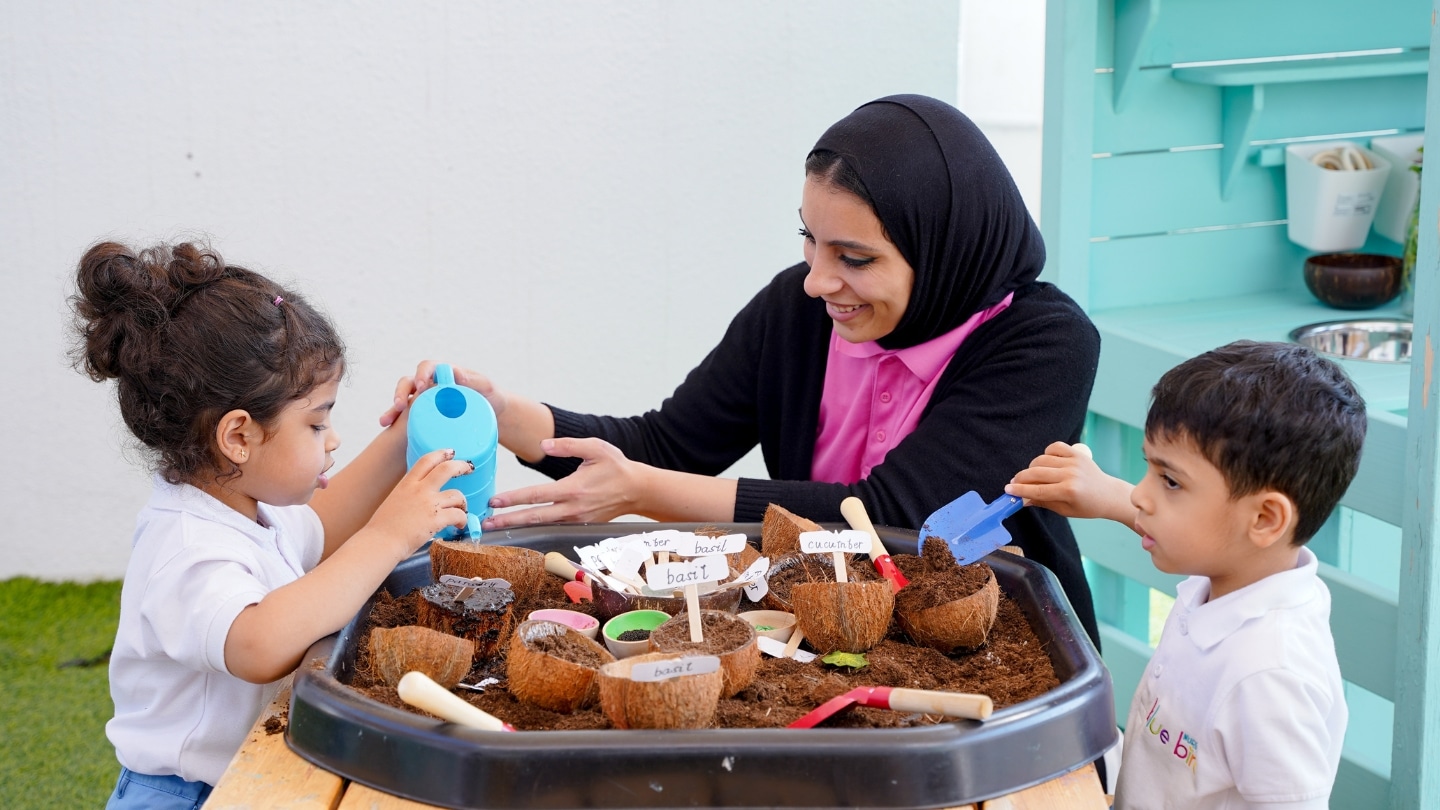
STEM in early years learning refers to educating young children, typically in the pre-primary age range, in science, technology, engineering, and math. In Dubai, early childhood centers weave STEM into play, hands-on activities and collaborative work, assisting children in acquiring skills such as counting, classifying and basic problem-solving.
Lessons use local themes, like desert plants or sea life from the Gulf, to make science and math feel close to home. Children tinker with blocks, water and sand, which develops their inquisitiveness and collaboration.
A lot of nurseries in the UAE now follow international standards and supplement with Arabic language and culture to suit local families. The following paragraphs discuss specific examples of how Dubai schools incorporate STEM in everyday lessons.
Why Early STEM Matters
Why early STEM is so important. When toddlers are exposed to STEM fields in an experiential manner, it prepares the foundation for lifelong critical thinking. In the UAE, where fast-paced development and varied sectors demand versatile ability, empowering young minds with an early STEM foundation aligns with the country’s goals for a capable and creative workforce of the future.
Cognitive Growth
STEM activities stimulate your children’s brains to develop and function more effectively. When children conduct hands-on experiments or construct things, they engage more than their memory. They begin to understand how things function, why things occur, and what causes what. This helps them reason and think in new ways, providing a solid foundation for future learning.
This isn’t surprising considering the obvious connection between early STEM exposure and enhanced problem-solving and analytical skills. Take, for instance, toddlers in Dubai nurseries who stack blocks to form a tower, which teaches them balance and gravity. They dump water and sand, witness transformations, and wonder why.
These daily experiences assist them in comprehending causality, routines, and beginner-level reasoning.
- Hands-on experiments help children:
- Experience science out in the wild, not just in books.
- Experiment and learn from errors.
- Ground abstract concepts in the concrete.
- Teach them to inquire and seek.
Why early STEM is crucial: Teachers who incorporate STEM into everyday lessons nurture children’s burgeoning minds. By integrating science, math, and play, teachers turn children into thinkers, not memorizers.
Future Skills
 Early STEM helps prepare kids for careers that don’t yet exist. In Dubai’s rapidly transforming employment landscape, skills such as problem-solving, and digital literacy have become increasingly essential. Early lessons in these subjects prepare children to adapt to emerging tools and workflows as they develop.
Creativity and innovation play a huge role. A lot of the careers in the future are going to require people to think out of the box. STEM activities show children how to experiment, troubleshoot, and iterate.
Group projects in STEM encourage teamwork. When kids collaborate in teams to solve a challenge or develop a project, they discover how to exchange ideas, hear each other out, and support each other. Such teamwork is an essential skill for any career.
Kids who engage in STEM young end up being more adaptable. This allows them to pivot as technology changes and new disciplines arise.
Innate Curiosity
Kids are naturally inquisitive, particularly in those early years. Early STEM feeds this impulse to investigate. When Dubai kids in classrooms are provided with basic equipment like magnifying glasses or measuring cups, they morph into mini scientists, hungry to peer deeper into their world.
Inquiry-based learning allows kids to pose questions and search for answers. This develops a pattern of critical thinking, not just passive acceptance. For instance, teachers can prompt kids to predict what will float or sink and then observe the results together.
Taking advantage of everyday objects, like water bottles, sand, or paper, gives science an accessible feel. It demonstrates that you don’t need fancy tools to learn grand lessons. Nature walks around the city or in parks allow children to encounter plants, insects, and rocks face to face, bringing the lesson to life.
When your children investigate the natural world, they develop admiration for how things operate and fit together. This type of learning sticks with them as they grow, making science feel playful, not mandated.
The Dubai Nursery STEM Approach
How Dubai nurseries are shaping early childhood learning with a STEM approach that values local identity and global skills. This approach mixes play, technology and cultural relevance to suit the particular needs of children in the UAE. It lays the foundation for the sciences, technology, engineering and math while nurturing them into inquisitive, compassionate and confident individuals.
It’s not about tech dependence, but rather harnessing their rich environment and everyday moments to ignite discovery and skills building in children from birth to age six.
1. Play-Based Inquiry
Play-sparked investigation fuels STEM in Dubai nurseries, enabling tots to discover through play and hands-on exploration. Things are arranged to get children posing questions, testing concepts and collaborating with others. They could, for instance, construct bridges or ramps with blocks and then test to determine which shapes support best.
This do-it style allows them to explore cause and effect and develop early math and science skills. Teachers observe children at play and intervene to scaffold when appropriate, posing open-ended questions to stimulate deeper thinking. Working in groups, the children share ideas, listen and problem solve as a team, much like STEM does in the real world.
By observing the degree to which children engage with such playful assignments, educators can determine what they understand and what remains to be learned.
2. Cultural Context
Dubai nurseries anchor STEM lessons in local culture, leveraging local traditions and stories to make learning more resonant. For example, lessons could range from constructing rudimentary wind towers to investigating the physics of dhow boats. This brings STEM concepts to life for kids.
Projects frequently encourage kids to discuss with their family members and share cultural traditions, such as traditional crafting or cooking, that have science or math underlying them. The curriculum further highlights the numerous achievements of Arab, South Asian, and other communities in STEM, allowing children to see themselves reflected in the work.
This approach builds respect for diversity and belonging.
3. Natural World
Dubai’s environment from its parks to its desert is an integral component of the STEM approach. Nurseries will frequently bring children outside to investigate plants, weather and even the very unique sand dunes. Staff guide children to identify patterns in nature, from leaf shapes to animal tracks, with the help of simple instruments such as magnifiers or centimeter tapes.
Nature hikes become laboratories for learning, where collecting rocks or observing birds inspires queries about mechanics. These tactile experiences foster spatial sense and an early interest in science among the kids.
4. Digital Integration
Technology in these Dubai nurseries is utilized mindfully, combining hands-on work with digital play.
5. Inclusive Design
Dubai nurseries want all kids to jump into STEM, regardless of ability or background. Learning environments are stocked with manipulative and materials accessible to any child, from floor puzzle pieces to audio tablets in Arabic and English. Teachers modify activities for various requirements, occasionally collaborating in pairs or small clusters to allow kids to assist one another.
The schools recognize that equitable access to STEM positions each child for future success, so they endeavor to dismantle obstacles and provide all children with equal opportunities to experiment, falter, and flourish.
STEM Beyond the Classroom
STEM extends beyond the classroom. Cultivating a solid STEM foundation is a collective endeavor that extends across home, community, and daily life. By integrating STEM into different contexts, young children acquire practical skills and learn to recognize inter-subject connections, making their experiences richer.
Home Activities
Families are crucial in cultivating curiosity. When parents support kids’ curiosity and urge them to question the world, they lay the groundwork for more profound education. Day-to-day rituals provide ample opportunities to weave STEM into domestic life.
It’s all about STEM beyond the classroom, and cooking is a perfect example. Measuring teaches basic math, following a recipe uses sequencing, and seeing what happens when you bake demonstrates simple science. Children thrive on predictable schedules that help them know what to expect and when to expect it, which supports STEM learning by mixing play, rest, and activity.
Simple experiments can make science feel less abstract. Armed with everyday objects, families can ignite exploration and develop a culture of curiosity. STEM beyond the classroom emphasizes making it okay to fail and to explore.
- Construct a bridge out of craft sticks and measure its strength with coins.
- Together, sort household items by size, shape, or color and talk about patterns.
- Take some water, cups, and spoons and discover volume.
- Plant seeds in a jar and document their growth with daily illustrations.
- Have simple machines come to life with pulleys, string, and a little basket.
City Exploration
Taking STEM learning around the city exposes kids to STEM in real-world contexts. Field trips to local science centers, museums, and parks make learning hands-on and memorable. Your kids start to observe what makes buildings stand, how traffic lights function, and how plants grow in the urban environment.
These excursions assist in demystifying the science of everyday objects and help bring abstract concepts down to earth. Inspire your kids to observe and ask questions. It’s the best way to build curiosity.
Talking about how bridges support cars or water flows through pipes links classroom lessons to what they experience every day. Activities grounded in nature, such as a visit to your local city park, enable kids to study local flora and fauna and combine science with geography.
Below is a table of Dubai resources that support STEM learning:
|
Name |
Type |
Location |
Features |
|---|---|---|---|
|
OliOli |
Science Center |
Al Quoz |
Hands-on exhibits, workshops, STEM labs |
|
Dubai Science Park |
Park |
Al Barsha South |
Outdoor learning, interactive installations |
|
Children’s City |
Museum |
Creek Park |
Interactive science exhibits, planetarium |
|
The Green Planet |
Indoor Park |
City Walk |
Indoor rainforest, live animal encounters |
Parent Partnership
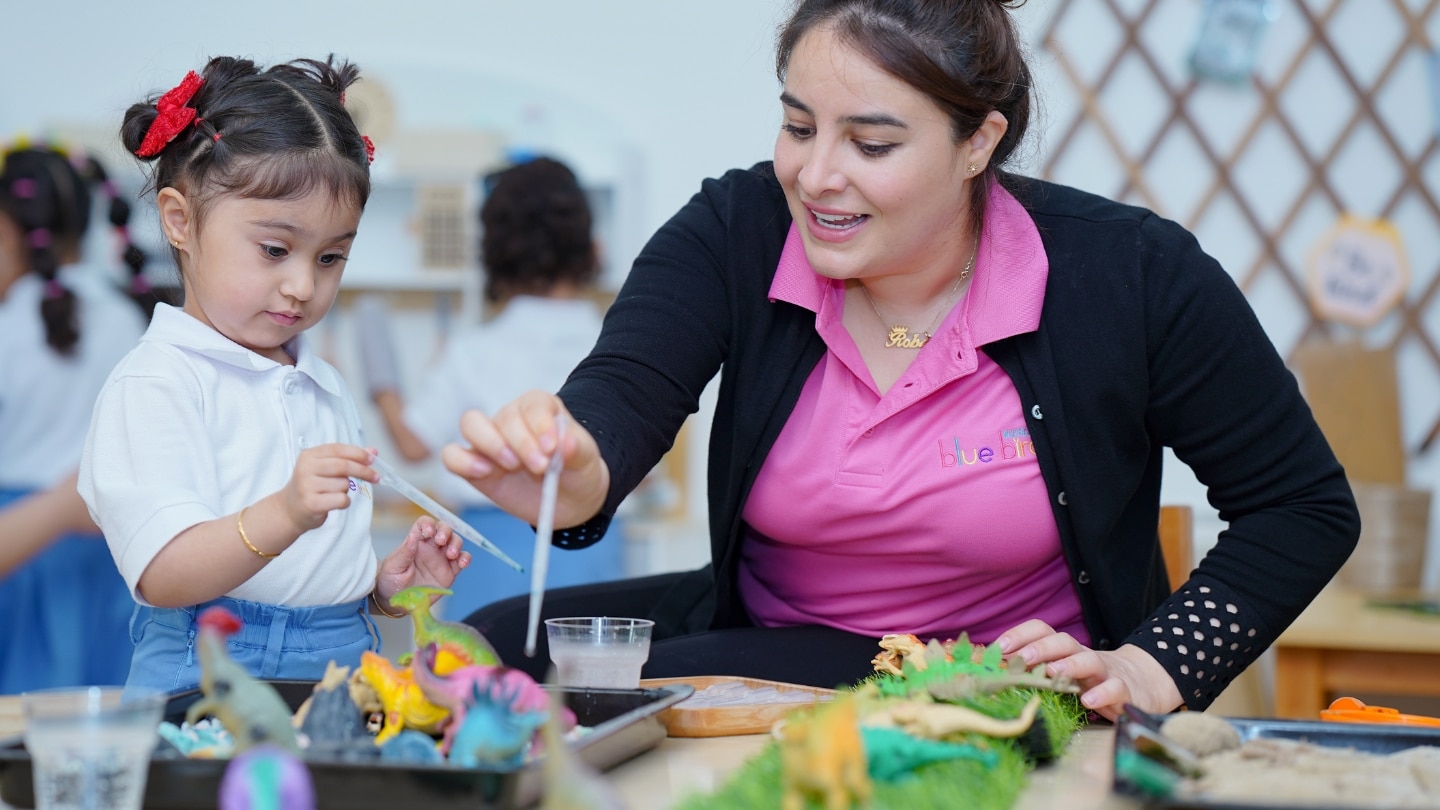
Robust parent-teacher partnerships accelerate STEM learning. Workshops assist families in seeing how STEM shapes their daily lives. When parents know what to look for, they can identify learning moments and nurture their kids’ interests.
With open lines of communication between home and school, questions and feedback go both directions, cultivating a network of support. Community bonds flourish with parent participation in school and home projects.
When families share what they noticed or something good from their day, kids practice expressing themselves and think back on what they learned. These micro-instances provide the space to develop confidence, critical thinking, and perseverance.
These skills count both now and down the road.
Cultivating a STEM Mindset
Growing a STEM mindset in toddlers isn’t just about instructing science or math trivia. Developing habits of mind such as inquiry, experimentation and embracing failure is essential. This style of thinking equips kids in Dubai to be innovative thinkers and problem solvers, prepared to thrive in a rapidly evolving world.
Early STEM education in the UAE can help bedrock a potent mix of science, technology, engineering and math with localized learning experiences. Hands-on play, whether building simple machines or exploring sand dunes, allows your kids to observe how things work and inspires them to find solutions independently.
Nurturing Resilience
Teaching resilience is teaching kids how to grind through those hard places. In a STEM activity, this might mean troubleshooting why a block tower keeps tumbling or a basic circuit refuses to illuminate. Adults can encourage kids to experiment, pivot, and persevere until they seek a solution.
A STEM mindset guides kids to view any obstacle they encounter as an opportunity to learn. When a science experiment fails to deliver the anticipated result, educators can highlight that it is not a failure; it is a chance to inquire why. This mindset keeps kids driven and less mistake-averse.
Historical anecdotes go a long way. For instance, recounting how Thomas Edison tried hundreds of materials before creating the light bulb demonstrates to kids that failure is par for the course. What makes these lessons even more relevant in the UAE context is reading about Emirati inventors or scientists.
Kids require a safe place to be risky. Whether in the classroom or at home, adults can emphasize that it’s okay to attempt, even if things don’t work immediately. This aids in developing confidence and resilience, which are valuable in both STEM and life.
Encouraging Questions
About: Developing a STEM mindset. Whether it’s pondering how the Burj Khalifa can be so tall or how date palms grow in the desert, your curiosity should be embraced.
Kids require opportunities to navigate their own interests via hands-on STEM activities. Preparing easy experiments, such as combining colors or measuring flour during baking, can arouse their curiosity and teach math or science in an enjoyable manner.
Teachers and parents can ask open-ended questions such as, “What do you think will happen next?” or, “How can we fix this?” These queries encourage kids to reason more and generate original thought.
Class conversations allow kids to exchange ideas and educate one another. When prompted to discuss their thoughts, they practice hearing, articulating, and questioning. This develops skills required for team-based and collaborative problem-solving, which are essential in STEM disciplines.
Celebrating Process
Helping kids ‘stoke the furnace’ by emphasizing process, not just product, you help children appreciate the importance of effort and the learning itself. Complimenting a kid for attempting alternative solutions to a problem or persisting with a difficult challenge can be more motivating than simply applauding the right answers.
Thoughtful reflection is key. Following a STEM activity, children can discuss what worked, what didn’t, and what they learned. This reflection helps them view errors as learning mechanisms, not failures.
Small victories count. Even small successes, such as constructing a block bridge that finally held, should be acknowledged. These days can inspire kids to continue experimenting and pushing the envelope.
A culture that appreciates creativity and innovation makes kids feel safe to try. In Dubai’s multicultural classrooms, appreciating alternative problem-solving methods makes all of us feel valued.
Assessing True STEM Learning
Assessing STEM learning in early years means checking not just what children know, but how they use what they know in new ways. It is important to see if children can use science, technology, engineering, and math ideas to solve problems they see around them. In Dubai and the wider UAE, where the push for innovation and digital skills is growing, early STEM assessment helps set the stage for skills needed in the future workforce.
Good assessment checks how well children ask questions, look for answers, and use tools and ideas from STEM in their daily life.
|
Assessment Method |
What It Looks For |
Example in Early Years (UAE context) |
|---|---|---|
|
Observational Assessment |
Engagement, participation, social interaction |
Watching if children share tools during a group building project |
|
Project-Based Assessment |
Real-world application, teamwork, creativity |
Assessing a group as they design a small garden or simple bridge using blocks |
|
Technology-Enhanced Assessment |
Digital skills, interactive learning |
Using tablets for simulations |
|
Self-Assessment and Peer Feedback |
Reflection, communication, self-awareness |
Children drawing or rating their own work, giving ideas to others |
|
Process Skills Assessment |
Inquiry, problem-solving, critical thinking |
Noting how children plan, test, and change their ideas during an experiment |
Observational assessments are a core part of early years STEM in the UAE. Teachers can watch how children ask questions, use STEM tools, and work with others. Seeing children’s curiosity and how they keep trying different things shows their real progress.
For example, if a child keeps building new shapes with blocks or changes their plan after seeing something does not work, that is a strong sign of growing problem-solving skills. Teachers who pay close attention to these small steps can spot both strengths and areas for support.
Self-assessment and peer feedback help children think about their own learning and see value in others’ ideas. When children talk about what they did, what worked, and what they would do differently, they grow more self-aware.
Peer feedback in the UAE’s diverse classrooms helps build respect for different views, and children get better at teamwork and communication. Drawing pictures of their work or using simple checklists lets even young students take part in their own assessment.
Aligning assessments with learning goals makes sure that what gets measured matches what is truly important. For STEM, this means checking both the facts children learn and the ways they use those facts.
In Dubai, where education standards often draw from both local and global best practices, this means balancing academic achievement with curiosity, motivation, and social skills. Technology can help by making it easy to track progress and offer new ways for children to show what they know, like recording their voices or using apps to solve simple puzzles.
STEM learning in early years should always look at the whole child. This means not just test scores, but how much a child enjoys exploring, how they talk with others, and how they solve everyday problems.
Using a mix of methods, watching, talking, trying out real projects, and using digital tools gives a fuller picture of real STEM growth. When assessment is built into play and daily tasks, it helps children see STEM as part of life, not just something for school.
The Educator’s Crucial Role
Teachers have a pivotal role in molding young kids’ initial life journey into STEM—science, technology, engineering and math. In Dubai’s multicultural, hyperactive environment, educators assist children in applying their lessons to the ever-evolving world around them. How teachers lead influences not only how children learn, but how they think, collaborate, and address authentic challenges.
Educators are in a key position to help demystify these topics and make them feel less daunting and more manageable even when time and resources are limited.
Professional growth is key for all educators, particularly in STEM. Schools throughout the UAE provide workshops and training to assist teachers in adapting what they learn to teach STEM with what they’ve got. This could involve crash courses in which educators experiment with project-based projects, familiarize themselves with basic tools, or exchange tips amongst themselves.
These sessions allow educators to acquire new skills, inject new life into lessons, and stay at the forefront of educational strategies. When teachers are prepared and confident, teens sense it. They’re more confident and more willing to experiment.
Cultivating a quality STEM environment is about more than just the right books or implements. It’s about teachers creating an environment in which each child is welcome, inquisitive, and confident to inquire. As Dubai is so diverse with so many different cultures and backgrounds, it’s important for teachers to be sensitive to inclusion and open to all perspectives.
This could imply incorporating collaborative assignments and free discussions, allowing students to exchange thoughts and ensuring that no one is excluded. A supportive class environment encourages students to participate and begin perceiving themselves as thinkers, creators, or innovators, not simply as students.
Educators can integrate STEM into the regular schedule, which prevents it from seeming like an overwhelming extra. For instance, a teacher might introduce a building or counting lesson with water bottles, paper rolls, and blocks. Brief, active experiences can slot into hectic schedules and help STEM seem less like work and more like fun.
This includes stepping outside to observe plants, keeping a weather log, or experimenting with storytelling to explain scientific concepts. Group discussions, trick challenges, and even art projects can be elements of a STEM-packed day.
The list below sums up the key roles teachers play as they help children grow to love STEM:
- Show kids how to connect learning with the world.
- Modify activities to include all kids, regardless of ability.
- Teach with a simple, common object – lessons that are easy to start.
- Create a classroom environment where inquiry is encouraged and errors are tolerated.
- Integrate STEM into everyday life with conversations, play, and time outdoors.
- Assist kids in attempting new thoughts, posing their own inquiries and persisting through hard issues.
- Promote collaboration and respect in all group assignments.
- Continue your education as educators so your STEM lessons remain new.
Conclusion
STEM in early years ignites a flame that endures. In early years learning, children question, experiment with hypotheses, and experience immediate successes and setbacks. Teachers take a back seat, letting children prod, stir, and construct independently, turning every lesson into play. Dubai’s early-year STEM drive prepares them for that future, whether it is coding, problem-solving, or just smart thinking. To help sustain this buzz, families and schools can partner. They can share activities, explore STEM kits, or attend science clubs on weekends. Want to see more curious minds in action? Pop into a Dubai nursery or take STEM home.
Frequently Asked Questions
What is STEM in early years learning?
Stem in early years learning exposes young children to science, technology, engineering, and math. It encourages them to explore, be inquisitive, and develop problem-solving skills early on.
Why is STEM important in Dubai nurseries?
Dubai nurseries utilize STEM to ready children for a tech-infused future. Early STEM cultivates creativity and critical thinking and furthers Dubai’s vision for innovation and educational excellence.
How do Dubai nurseries teach STEM to young children?
Nurseries in Dubai employ hands-on activities, real-life problem solving, and interactive play. These lessons are age-appropriate and engaging, making learning fun and meaningful for young kids.
Can parents support STEM learning at home?
Absolutely, parents can support STEM in the home by nurturing curiosity, offering simple science experiments, and utilizing everyday objects for counting and building. Reading STEM books together helps too.
What makes a strong STEM mindset in children?
Having a solid STEM mindset involves constant curiosity, asking questions, and not giving up on problems. It’s about failing and loving the thrill of innovation.
How is STEM learning assessed in early years?
STEM in early years learning is evaluated via observation, portfolios, and children’s engagement activities. They seek problem solving, creativity, and teamwork from teachers.
What roles do educators play in early STEM education?
Teachers lead, motivate and stimulate children. They establish supportive environments for discovery, offer materials, and pose open-ended inquiries to encourage children to explore more thoughtfully and develop their STEM abilities.